The Day My Meditation Teacher Saved Us
 I vividly remember when my meditation instructor came to our rescue when she saw my friend (who was having a break down) and me. When he came to us, I immediately saw the benefits of learning about calming techniques through our meditation teacher training.
My friend was about to see a person she didn’t like. Nope, she was not feeling fear. She was just anxious that the meeting may not resolve anything— she was worried that things would become worse than it is now.
I thought she had a panic attack, but she insisted that it was an anxiety attack. Are these two really different from each other?
In this article:
Anxiety and Anxiety Attacks
Is anxiety attack it the same as panic attacks?
Is meditation good for anxiety?
How to help you calm down during an anxiety attack
Try deep breathing
Be aware that you’re having an anxiety attack
Try closing your eyes
Practice mindfulness
Try muscle relaxation techniques
Before you continue you might like to consider our free worksheet on exploring “Overcome Anxiety”. Please download this worksheet here.
Anxiety and Anxiety Attacks
From the name itself, it is caused by anxiety. Almost 40 million adults in the US are affected by anxiety disorders. This is the most common form of mental struggle. Every third person you meet may likely have suffered or will experience anxiety at a point in their lives. There is a notion that once you have anxiety, it will stay with you forever. But anxiety disorders are highly treatable. Sadly only less than 40% of affected individuals seek help for it. If you are or you think you are suffering from anxiety, remember that you are not alone. Seek professional help because anxiety can be lessened through time with the proper management. Acceptance and Commitment Therapy (or ACT) and other evidence-based treatments are valuable tools and techniques to help manage all forms of anxiety. The truth is, anxiety is a form of a warning signal against natural dangers. Therefore, to quote my meditation instructor, it is normal to feel anxious at times. But you may want to seek help when you feel like your anxiety already affects you way too much in your everyday life. The term anxiety attack is largely interchangeably used with the term panic attack. However, in the manual that clinicians use, the Diagnostic and Statistical Manual for Mental Disorders (DSM), there is no existent clinical diagnosis or term for “anxiety attack.”
 Is an anxiety attack the same as panic attacks?
The answer is no. Our meditation teacher training taught us that although interchangeably used, these two must be differentiated.
An anxiety attack happens after constant worry, and the feeling of anxiety can persist after days to months. On the other hand, panic attacks may occur unexpectedly, and after being subjected to triggers for fears, they may last for minutes then gradually subsides.
To put it simply, the differences between the two lie in their triggers, clinical diagnosis, and persistence.
- Triggers- Constant anxiety (anxiety attack); presence and absence of fear triggers (panic attack
- Clinical diagnosis– No existent clinical diagnosis on the DSM (anxiety attack); mental disorder (panic attacks)
Persistence– Anxiety or worry can persist after an attack; Short burst and may peak at 10 minutes then gradually subsides.

Is meditation good for anxiety?
One of the noted hidden dangers of meditation is the occurrence and intensification of anxiety and depression. So can it still be recommended for managing stress?
The answer is YES but, people with a history of anxiety and depression should use meditation with guidance from a meditation teacher or use guided meditation audios.
It should also be emphasized that meditation is not an alternative to psychological therapy and that they are recommended to seek professional help for their mental wellness still.
How to help you calm down during an anxiety attack
1. Try deep breathing
This is one of the basic fixes for an anxiety attack. This is also one of the simple breathing techniques for calming down that my meditation teacher taught us. It goes like this:
- Put your attention on taking deep breaths.
- Focus on breathing in and breathing out through your mouth.
- Feel the air as it slowly fills your chest and belly and as it slowly leaves them again.
- Breathe in for a count of four.
- Hold for a second or two.
- Breathe out for a count of four.
2. Be aware that you’re having an anxiety attack
Recognizing and telling yourself that you’re having an anxiety attack instead of a heart attack is an excellent way to remind yourself that it will pass and that you’re OK. Try saying to yourself out loud, “I’m having an anxiety attack because I have pent-up anxiety for a while. I’ll be fine. I’m not dying.”
3. Try closing your eyes
Your anxiety may have been triggered by the things you see or the things you’ve been thinking. Try closing your eyes to lessen the stimuli and keep repeating to yourself that you are aware that you are currently having an anxiety attack. Focus on deep breathing.
4. Practice mindfulness
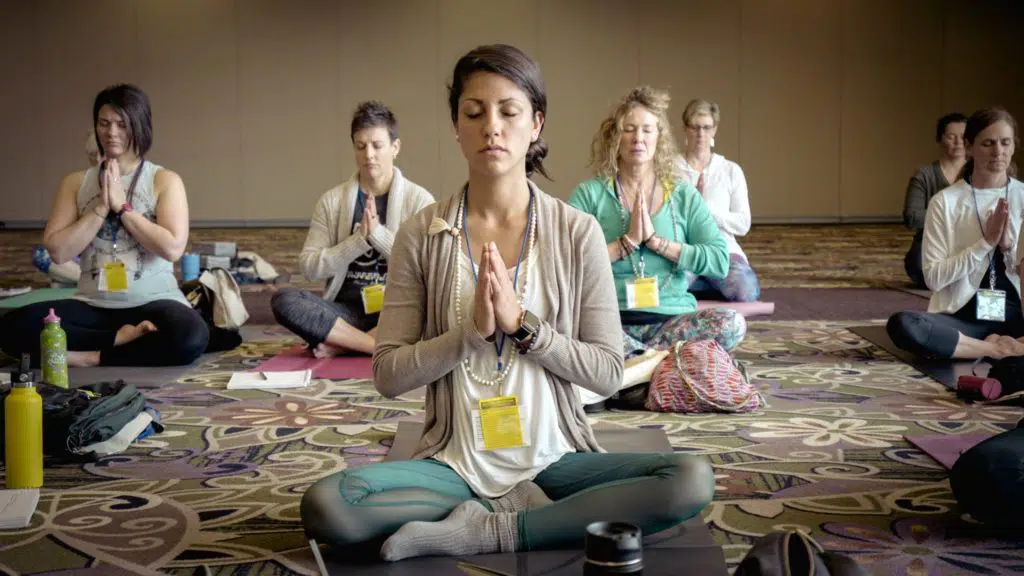
Through our meditation teacher training, I learned that mindfulness is a good grounding activity to let you off from those worries you are thinking. You can try the following:
- Close your eyes and keep reminding yourself that you are having an attack.
- Accept that this attack happened because of too many worries and fears that you have. Do not judge yourself.
- Be aware of your breathing. If you want, you can inhale and exhale loudly to help you focus on it.
- Note the other things you hear (like wind, vehicles, bells etc.) and feel (ground, wind, water, etc.). Be aware of the thought that comes to you but doesn’t dwell on them.
5. Try muscle relaxation techniques
Like deep breathing, focusing on the relaxation of different muscles can help you control your body. You can start this by relaxing small muscles group up until you reach the bigger ones.
- Start with your fingers. Tighten your thumb, move it close to your palm, and then flex it out and loosen it up. Do it for your other fingers.
- Move up the tightening and loosening to your arm, then your shoulder, to upper back, up until you’ve relaxed every muscle group that you can.
This is best practiced when you do not have an attack to be familiar with what to do when experiencing one. This is quite close to the body scan meditation that we learned from our meditation teacher training course.
Someday I see myself being someone who would apply what I learned from our meditation teacher training to help a stranger in need of calming.
If you’re looking to manage anxiety and cultivate calmness in your life, download our Overcome Anxiety Workbook to explore proven techniques like deep breathing, mindfulness, and muscle relaxation that will help you regain control.