Why Is Happiness Fleeting?

Happiness and pleasure are not the same thing!

Why is it that happiness is fleeting? How could it be that you feel great in the morning yet that contentedness fades away by the evening? If I would ask you about your happiest time during the last month your mind will probably wander to an event or a period of time where you felt good, experienced great pleasure and were filled with positive emotions. The association of happiness with joy is a natural one, and yet happiness consists of much more than these positive feelings. To understand this greater depth of happiness we need to explore positive psychology theory and research where a distinction is made between hedonic and eudaimonic happiness. Such a difference would also make it easier to understand why we experience happiness as a fluctuating emotion.

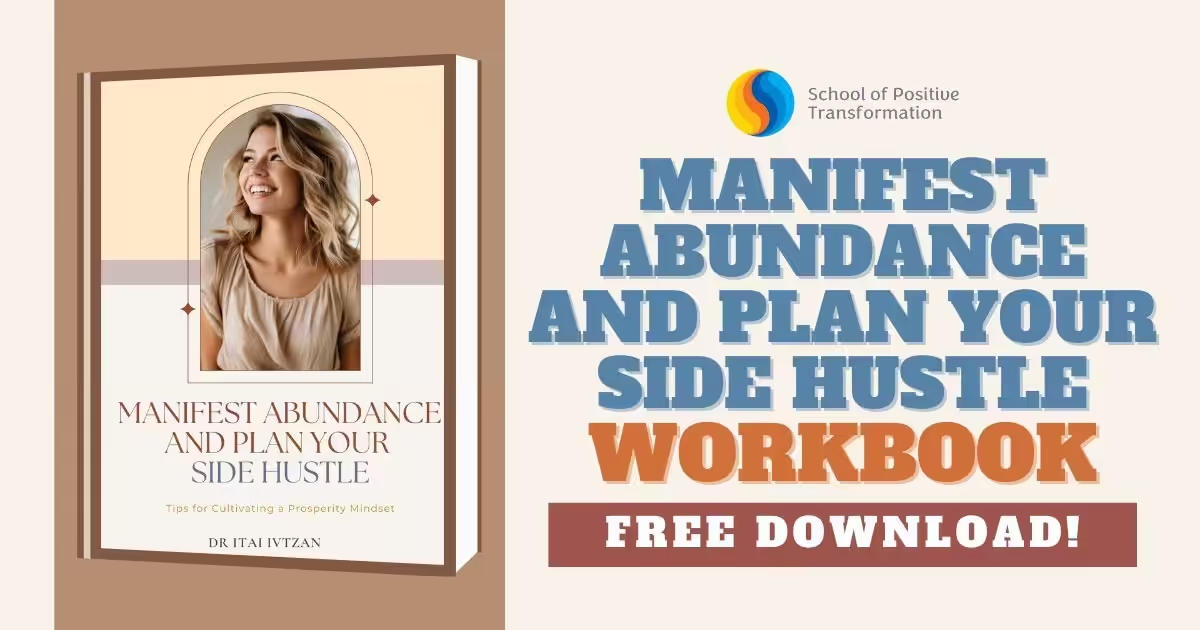
But before you continue you might like to consider our free worksheet on exploring “Manifest Abundance and Plan Your Side Hustle”. Please download this worksheet here.

The first dimension of happiness is hedonistic. This is where a certain event triggers a fabulous feeling – you are eating a slice of pizza which is fresh, hot and delicious, being told by your boss that you’re getting a raise, or receiving praise in school or at work for an assignment. It feels great, and you are glowing inside – it’s a fabulous feeling of joy and pleasure. This aspect of happiness is easy to understand as it is based upon a very simple rule: a maximum of positive emotions and a minimum of negative emotions. In other words, to experience it you need to feel as much joy as possible but sadness or frustration cannot be part of the equation. You might be thinking, “Well, of course they can’t be part of the equation, it’s happiness we’re talking about here”. But as you will see, happiness is a much more complex phenomenon than commonly thought. To better understand this intricacy let’s move on to eudaimonic happiness.

If hedonic happiness is the celebrating, carefree brother, eudaimonic happiness would be its purposeful, aware and deeply contented twin. Eudaimonic happiness asks “Who are you?” followed by “What do you do?” The relationship between the answers determines your experience of eudaimonic happiness. Put simply, if your deeply held values and beliefs are expressed in your life’s choices and activities then you would feel eudaimonia. This is the kind of happiness that is based upon the question of meaning in life. Research in positive psychology shows that people who wake up in the morning with a clear knowledge of their raison d’etre in their life, experience a deep feeling of happiness and satisfaction. Their lives are filled with passion and vitality which are at the heart of eudaimonic happiness.

However, as you might imagine, this journey of eudaimonic happiness is not an easy one. It is filled with challenges, questions, doubts, and the natural obstacles of life. Indeed, it is highly rewarding for long-term happiness, but frequently short-term impact might be difficult as you are struggling to express meaningful insights. Imagine, for example, you are dissatisfied at work. You go through an agonising period of time where you feel that “who you are” and “what you do” are mismatched. You then begin a personal journey of realising what is meaningful to you – and how to achieve it. It might be that you need to take further studies at university, or move down the job ladder into a new position. This process in the short-term is challenging and may instil feelings of frustration, sadness and even pain, as part of this self-actualizing experience. And yet it is a natural part of eudaimonic happiness. Going through this development might be challenging but it would probably fill you with a highly satisfying and deep feeling of meaning as you proceed with it. You are investing in your long-term happiness.

The question “why is happiness fleeting?” might be easier to understand now. Hedonic happiness, in its essence, is a brief experience of joy and pleasure which quickly fades away. When you eat a delicious chocolate cake you get short-lived feeling of pleasure spreading through your body – but it is a fleeting one nonetheless. Even the gratification of winning an unexpected amount of money fades away much more quickly than we would have thought. As we equate happiness and pleasure, Eudaimonic happiness offers an instable experience of positive emotions. Eudaimonic happiness, as we have seen, is filled with challenges, making it difficult for us to experience consistent joy. We will no doubt discover moments of great satisfaction and positive emotion, but the difficulties along the way would make it feel as if this positivity comes and goes instead of being constant. And there it is – happiness which we much prefer to feel as never-ending bliss, becomes a fluctuating, fleeting experience. And yet, as we walk our personal path of eudaimonic happiness we discover a new kind of happiness: deep contentment and self-fulfilment. This kind of happiness might be challenging and lack pleasure and joy at certain points in time, and yet it fills us with the burning fire, and passion, of those who live meaningful and purposeful lives.


Are you ready to explore the deeper dimensions of happiness and begin your journey towards more lasting fulfillment? Download our “Manifest Abundance and Plan Your Side Hustle” workbook for free here and start cultivating a purposeful life that brings you long-term happiness today!

WAIT!

Before you go, we'd like to give you a FREE workbook to support your journey 👇

Smiling woman with wavy brown hair wearing a navy blazer and white shirt, standing in a softly blurred office setting, conveying positivity.

Carolyn Freyer-Jones

Kickstart Your Coaching Practice

Highlights & Achievements:

Coach, facilitator, and contributor to coaching education. Carolyn is associated with practical coaching training and learning resources, supporting coaches and leaders in developing effective, ethical, and reflective coaching practices.
Man in a light blue shirt smiles gently at the camera. He has short, dark hair and stands against a blurred indoor backdrop, conveying warmth and approachability.

Rob Willson

Cognitive Behavioral Coaching

Highlights & Achievements:

Coach and educator contributing to leadership and coaching skills development. Rob is involved in professional training contexts, supporting the application of coaching tools and methodologies in organisational settings.
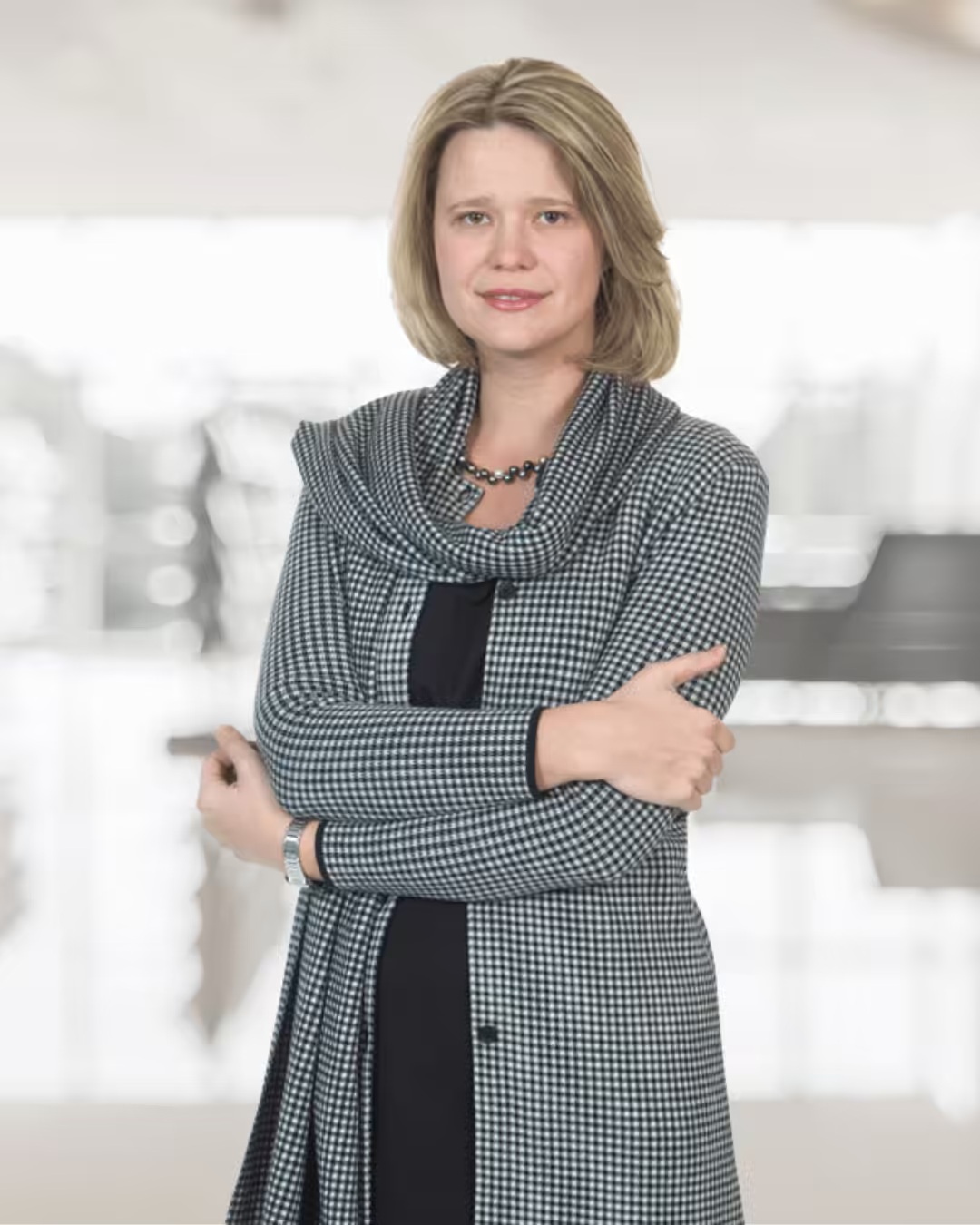
A woman with shoulder-length blonde hair is confidently posing with crossed arms. She wears a black and white checkered outfit and a necklace. The background is softly blurred, suggesting an indoor setting.

Prof. Ilona Boniwell

Positive Psychology Coaching

Highlights & Achievements:

Professor of Positive Psychology and Coaching Psychology. Ilona is a pioneer of applied positive psychology education in Europe and has founded and led postgraduate programmes in the field. Her work focuses on wellbeing, resilience, strengths, and evidence-based positive psychology interventions.
A middle-aged man with short gray hair and a beard wears a white turtleneck and a navy blue striped sweater, standing confidently indoors.

Jon Williams

Coaching for Performance

Highlights & Achievements:

Coach and contributor to professional coaching education and training programmes. Jon is involved in leadership and coaching development initiatives, supporting skill-building and reflective practice within organisational and coaching contexts.
A man in a blue suit and light blue shirt, with curly blond hair, smiles softly against a blurred, bright indoor background, conveying professionalism.

Prof. Erik de Haan

Relational Coaching

Highlights & Achievements:

Professor, executive coach, and leading expert in coaching supervision. Erik is widely recognised for his contributions to relational coaching, organisational development, and reflective practice, supporting both individual coaches and leadership systems worldwide.
Elderly man in a dark suit and striped shirt smiles warmly, standing in a bright, blurred background. The tone is professional and approachable.

Prof. Peter Hawkins

The Coaching Relationships

Highlights & Achievements:

Professor of Leadership and a leading authority in systemic team coaching and coaching supervision. Peter works internationally with boards, leadership teams, and organisations, and has written extensively on leadership, coaching culture, and systemic change.
Smiling older man in glasses and a light pink shirt sits indoors, with a softly blurred background of a modern, brightly lit office space.

Prof. David Clutterbuck

Goals

Highlights & Achievements:

One of the world’s most influential figures in coaching and mentoring. Professor Clutterbuck has authored and co-authored foundational texts in coaching, mentoring, and organisational development. His work has shaped global standards for coaching practice, supervision, and mentoring relationships.
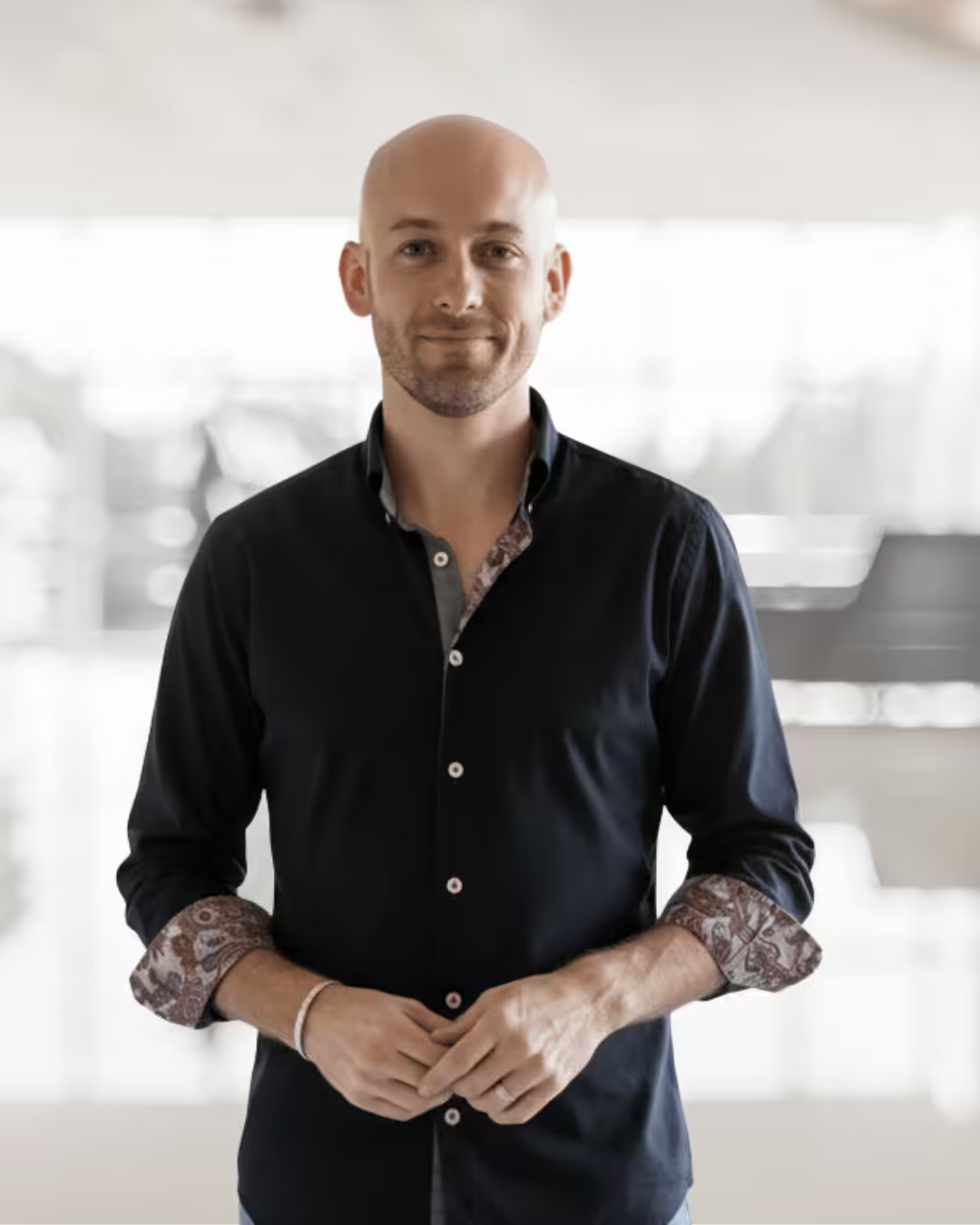
A bald man in a dark, buttoned shirt with patterned cuffs stands indoors. He smiles subtly, with a bright, blurred background, exuding a calm, confident presence.

Devon White

Communication

Highlights & Achievements:

Coach and leadership development practitioner involved in contemporary coaching education. Devon has contributed to professional coaching programmes and discussions alongside established academics and practitioners in the coaching field.
Smiling woman with short auburn hair wearing a black dress and polka dot jacket. She stands confidently in a bright, blurred office setting.

Linda Aspey

The Coaching Relationships

Highlights & Achievements:

Coach, facilitator, and contributor to professional coaching education. Linda is recognised within the coaching psychology and leadership development community for her involvement in learning programmes, events, and reflective coaching practice.
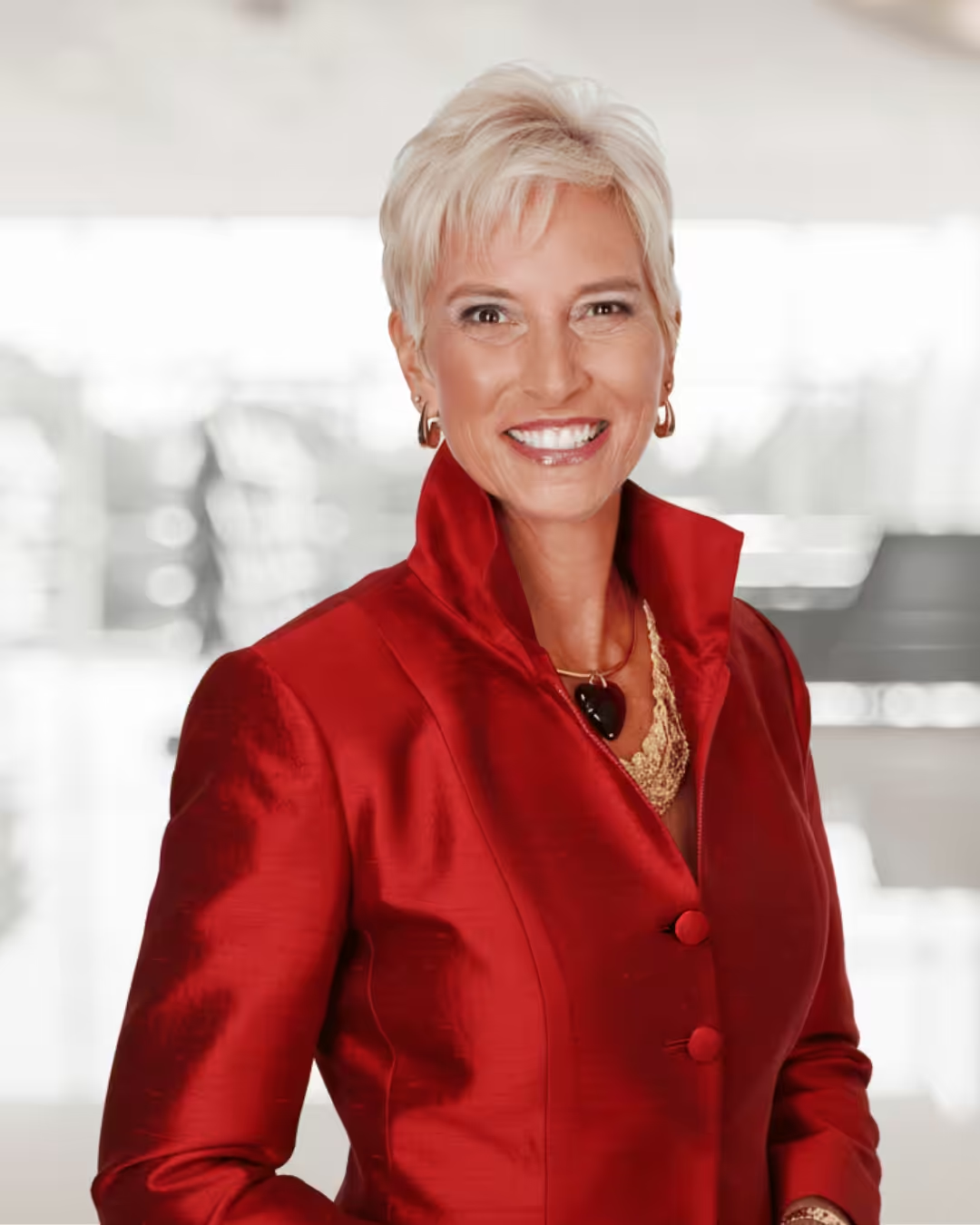
A woman with short white hair smiles confidently, wearing a red blazer with a popped collar. The background is softly blurred, creating a warm, professional ambiance.

Dr. Chérie Carter-Scott

Psychological Foundations

Highlights & Achievements:

Executive coach, author, and pioneer in the coaching profession. Often referred to as “The Mother of Coaching,” Dr. Carter-Scott has been a leading voice in personal and professional development since the 1970s. She is a bestselling author and has trained coaches and leaders worldwide in motivation, leadership, change, and self-esteem.
Smiling man in suit with colorful tie stands in bright, blurred office. Hands clasped, he exudes confidence and warmth.

Prof. Jonathan Passmore

An Introduction to Coaching

Highlights & Achievements:

Chartered Psychologist, Professor of Coaching and Behavioural Change, executive coach, and author. Jonathan has published extensively in coaching psychology, leadership, and organisational change, including numerous academic articles and books. He bridges academic research and applied practice, contributing globally to coach education and evidence-based coaching.
Smiling man in a black suit and white shirt stands against a softly blurred, bright background. The atmosphere is professional and approachable.

Dr. D. Ivan Young

The Coaching Relationships

Highlights & Achievements:

Coach, educator, and thought leader in professional and relationship-focused coaching. Dr. Young is frequently featured alongside senior coaching scholars and practitioners in advanced coaching education and professional development settings, contributing to the evolution of reflective and relational coaching practice.
Smiling woman with short red hair wearing a blue blouse and earrings, standing in a softly blurred indoor setting, conveying a warm, professional tone.

Catherine Bell

Psychological Foundations

Highlights & Achievements:

Professional Certified Coach (PCC) and Master of Applied Positive Psychology (MAPP). Catherine specializes in leadership transitions, executive presence, and sustainable performance. Her work combines positive psychology, emotional intelligence, and strategic leadership development to help leaders thrive while maintaining wellbeing and purpose.
Smiling man in a navy blazer and shirt stands confidently with hands in pockets. The backdrop is a softly blurred office environment, conveying professionalism.

Yannick Jacob

An Introduction to Coaching

Highlights & Achievements:

Existential Coach, Positive Psychologist, Coach Trainer, and Supervisor. Yannick is the Programme Lead for the Accredited Certificate in Integrative Coaching at the School of Positive Transformation. He has taught coaching, positive psychology, and personal development at institutions including the University of East London, Animas Centre for Coaching, and The School of Life. His work integrates existential philosophy, coaching psychology, and human development to support meaningful change in individuals and leaders.
why is happiness fleeting

Highlights & Achievements: